Site conditions drive the category
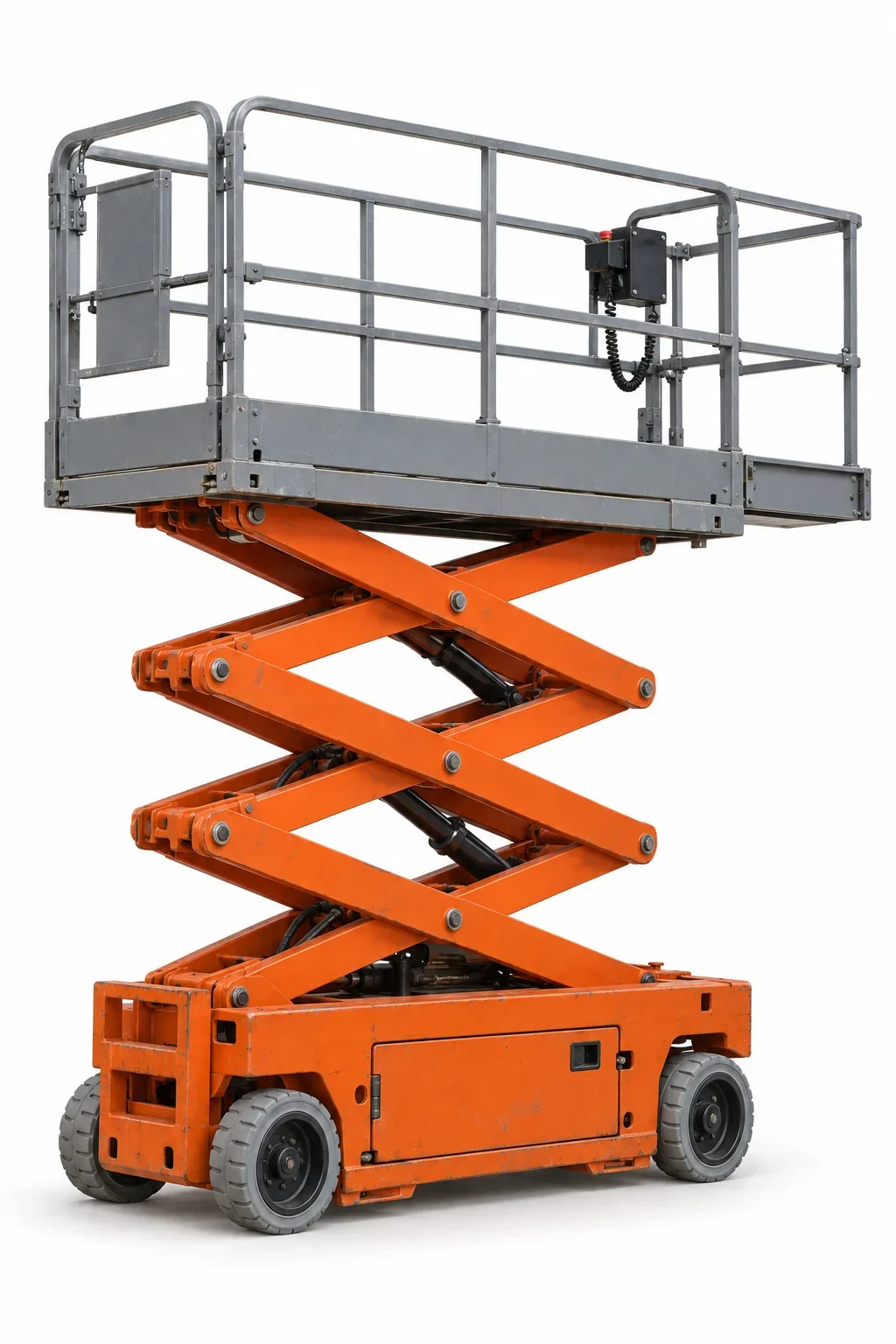
Rough‑terrain scissor lifts matter when the surface is unpaved, saturated, or rutted. Larger tires, 4x4 drivetrains, and higher ground clearance improve stability where slab units bog down. On mixed‑use redevelopments, crews often move between compact alleys, gravel lots, and paved sections; a rough‑terrain unit keeps exterior work moving between rain events.
Job geometry on exterior tasks
- Can the machine sit directly under the work face? If yes, a rough‑terrain scissor can provide a broad platform for crews and materials.
- Long façade or panel runs benefit from wider platforms and deck extensions that reduce repositioning across elevations.
- If the work is offset by setbacks, canopies, or landscaping, review booms at /boom-lift-rental/ for outreach.
Indianapolis factors to consider
- Silty clay loam holds water, causing soft spots after storms. Traction and flotation reduce sink‑in and rutting compared to slab units.
- Mixed phases downtown can alternate interior and exterior work. Pair a rough‑terrain scissor outside with an electric slab unit inside at /electric-scissor-lift-rental/.
Measurements that narrow the model
- Platform height and working envelope required
- Platform capacity for panel handling or exterior trades
- Overall width for site gates, alleys, and scaffold lanes
- Grade tolerance along access paths
Related equipment for exterior sites
- /telehandler-rental/ to place materials at elevation next to the lift
- /generators-light-towers-rental/ to extend work windows
- /temporary-fencing-barricades-rental/ for perimeter control during phases
Actual ground conditions, the selected unit’s instructions, and site procedures govern exterior work at height.