What shapes scissor lift choices in Indianapolis
Two environments drive most lift comparisons locally. First, indoor logistics and manufacturing floors where slab integrity, tight turning, and quiet operation favor electric scissor lifts with non-marking tires. Second, seasonal outdoor work where wet ground and uneven grades push projects toward 4x4 rough‑terrain platforms. The regional climate adds frequent swing days—dry in the morning, soft by afternoon—which changes whether a unit can safely stage near the work.
Start with job geometry, then the surface
Key constraints typically include: - Can the machine sit below the task, or is outreach around an obstruction required? - What clear heights, aisle widths, and doorway sizes control delivery and staging? - Is the slab rated for concentrated point loads at the intended working height? - Will silty clay loam be firm enough for slab-style tires, or is a rough‑terrain chassis appropriate?
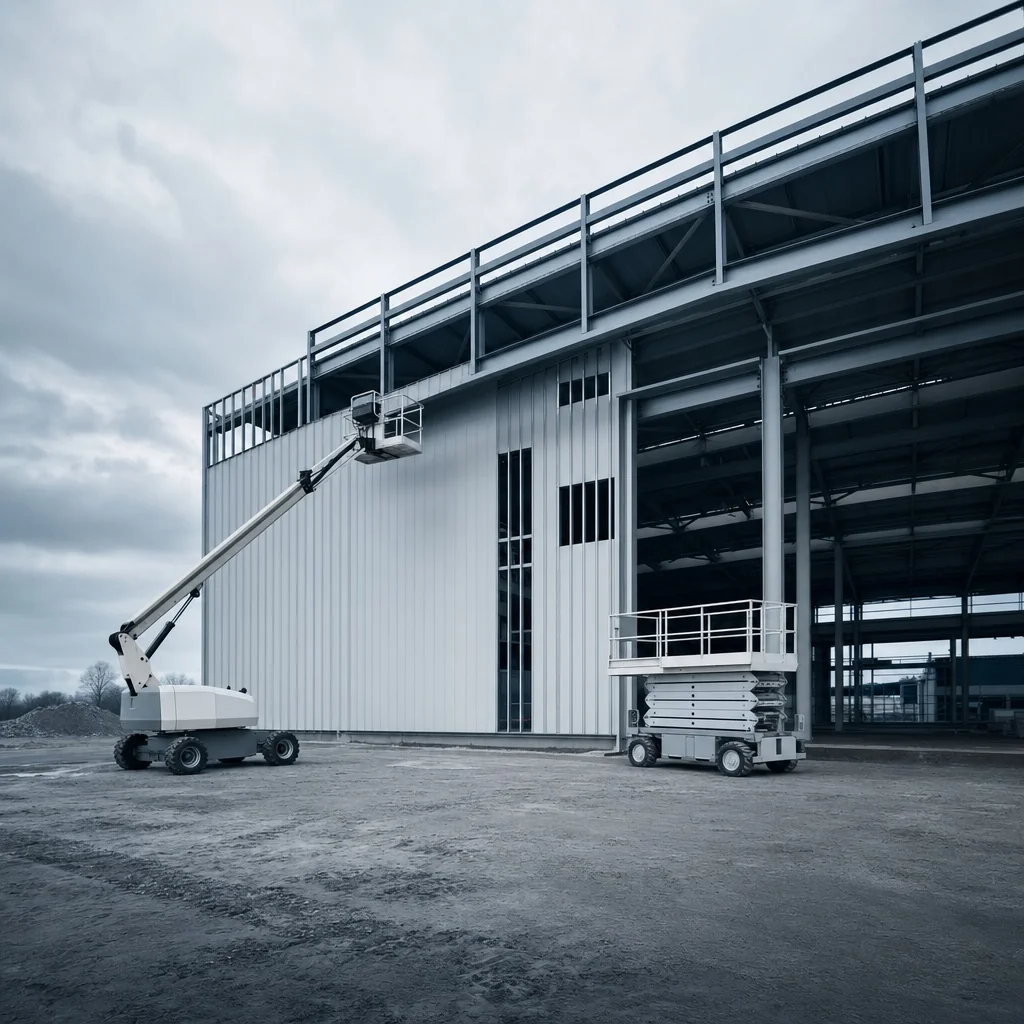
If the task is straight up-and-down inside a clear bay, an electric scissor often fits. If the approach is outside across soft ground to reach a facade or canopy, a rough‑terrain scissor is usually the comparison point. When the work requires reaching over conveyors, canopies, or landscape features, a boom lift becomes part of the discussion.
Why “logistics‑grade” matters here
Around-the-clock sorting and distribution schedules compress changeovers and maintenance windows. That means lift selection often hinges on predictable duty cycles, compact turning radii, and the ability to stage quietly under lighting retrofits or mezzanine work without disrupting nearby operations. Planning around those windows usually favors modern electrics for interior tasks and rough‑terrain units with ample ground clearance for exterior staging.
Related equipment decisions
- Interior service bays and storefront fit-outs: vertical mast lifts for single-person tasks.
- Dock expansion and steel work: telescopic vs. articulating booms depending on obstacles.
- Site logistics and materials: telehandlers for palletized loads and staging.
For a quick conversation about dimensions or access paths, see Contact.